Overview

Operational Features

Bi-Directional Air Flow - Air entering is cleaned and dried. Expelled air partially regenerates the silica gel and "back flushes" the particulate filter to prolong the life of the breather.

Durable Construction - Air Sentry® is manufactured from rugged ABS plastic and impact-modified Acrylic.

Water Vapor Adsorbent - The Silica Gel used in Air Sentry® breathers is chemically inert, non-corrosive, and conforms to all regulated toxicity standards in the U.S. and other countries. Microscopic pores allow the silica gel to adsorb up to 40% of its own weight.

Color Indicator - When maximum adsorption is reached, the silica gel turns from gold to dark green to indicate that replacement of the breather is required.

Activated Carbon - As air is expelled from the tank, it passes through activated carbon which removes oil vapors, fumes and odors.

Safety Sealed - Seals keep moisture from entering the units until they are placed in service. They are easily removed without tools or sharp instruments.

Contamination Control Breathers:
The First Line of Defense

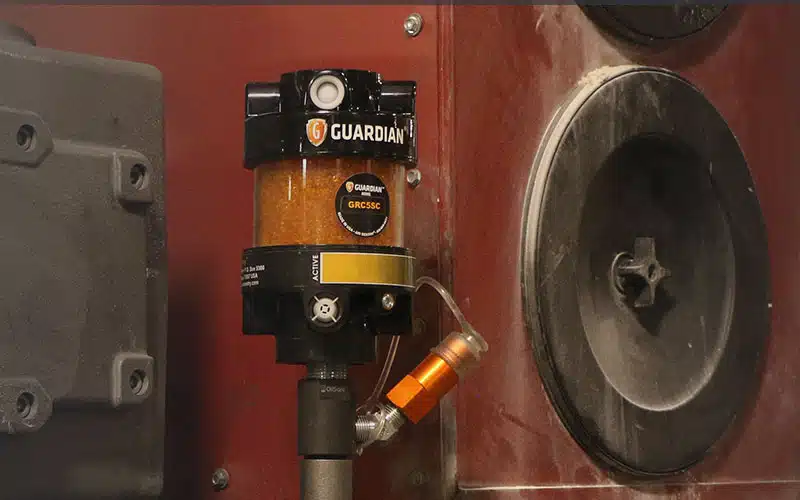
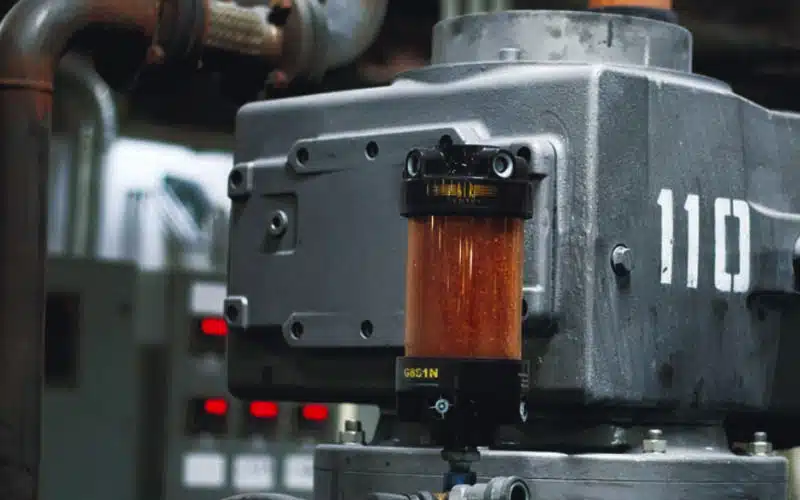
Air Sentry® Breathers should be an integral part of any proactive maintenance and reliability program. Designed to replace the breather cap or air filter on gear boxes, hydraulic fluid reservoirs, bulk storage tanks, oil drums, oil-filled transformers, and other fluid reservoirs, Air Sentry® breathers adsorb water from the air before it enters your fluid system and remove particulate contaminants as small as 2 microns. Better yet, the silica gel changes color when it is fully depleted, turning from a gold color to dark green. This makes it simple to identify the condition of a breather and quickly replace the breather, maintaining the cleanliness of the fluid reservoir.

One research group found that greater than 75% of all machine wear related failures were due to particulate contaminants. Frequently the greatest cost of equipment failure is not the component replacement cost, but the labor production downtime. Most particles start off as dirt (hard silica) that becomes airborne, finds its way into lubricant and fuel reservoirs, and is later transported to bearings, bushings, seals, valves, and other machine components. There they become key ingredients in abrasion, erosion, and fatigue failures. The contaminants also cause lubricant degradation, shortening the life of the lubricant and decreasing its ability to lubricate.

When it comes to bearings, contamination is especially devastating. Bearing manufacturers claim that free of contaminants, a bearing could have an infinite life. Silt particles reduce oil’s lubricity and can produce localized pressures over several hundred thousand pounds per square inch, resulting in spalling, denting, abrasive wear, and fatigue failures. Contamination is the second leading cause of bearing failure, right behind improper lubrication. Bearings aren’t the only component at risk. With typical machine clearances measured in thousandths of an inch, it doesn’t take much contamination to destroy machine components such as bushings or hydraulic valves. With lubricant films typically ranging from 0.1 to 50 microns, it doesn’t take a very large particle to disrupt that film. In fact, studies have shown that particles of 10 microns or smaller cause the greatest amount of wear.

Particulate contaminants aren’t the only culprit. Water is just as deadly. Its presence in lubricants and hydraulic fluids creates a host of problems including, rust, lubricant additive depletion, viscosity changes, and sludge formation as a byproduct of oxidation. The result of this is excessive wear and component failure.

Products

D-Series
Disposable Stationary
Z-Series
Limited Space
X-Series
High Humidity/Dust
R-Series
High Vibration
XR-Series
Extreme Environment
L-Series
In-Line Airflow
M-Series
Heavy Duty
F-Series
Caustic Fumes/Gaseous
How Breathers Work
 
Activated Carbon
Fume and Odor Control
Adapters
For Easy Installation
Tech Sheet Downloads